Wikimania 2026: the good, the bad, and what to do next year

 wikimedia
travel
wikimedia
travelI attended Wikimania 2026 (taking place from July 21–25 in Paris, France) this year. This was my first time attending a Wikimania event, and it was a very interesting experience. While the event changes significantly every year (as local teams take the lead in many organizational aspects), I hope this post can give a good idea of what to expect.
planning and travel logistics
I applied for a scholarship to attend the conference. Scholarships cover travel (via air or train), a hotel room, and a stipend to cover miscellaneous costs. Scholarship applications were open from September 10 to October 31 in 2025; it is important to be prepared to apply early.
This wasn’t my first time applying for a scholarship (I’d also unsuccessfully applied in 2024). However, I’ve become more involved in the Wikimedia movement since then, so I was more confident in my ability to get a scholarship. Users with extended rights, such as administrators, generally have a good chance of getting scholarships, though it’s worthwhile for anyone who’s an active Wikimedian to apply if interested in attending. I also put significantly more effort into my scholarship application this time (general advice is to not use AI and actually answer the questions).
My scholarship application was accepted on February 2. Travel was booked by Amex GBT in March (they booked me on AF 377 for DTW→CDG and DL 95 for CDG→DTW). The important thing about this phase is to respond promptly to their emails as you need to confirm proposed travel options within 24 hours.
Hotel arrangements were a bit less clear. The first email we got regarding hotels was on July 6, where I was given my assignment (the Campanile Prime Paris La Villette) and confirmation number. However, this wasn’t an email sent from the hotel itself, but from the travel team, and it didn’t actually include the hotel’s address. A follow-up email was sent with an address on the 7th, but I didn’t receive any email from the hotel until check-in.
As I was traveling from the United States, which has visa-free entry to France, I did not need proof of medical insurance. This is good, because while the scholarship did provide medical insurance (through Healix), we did not receive documentation of the insurance plan by email. Many travelers were worried about this, but it doesn’t seem like it actually affected anyone at the border.
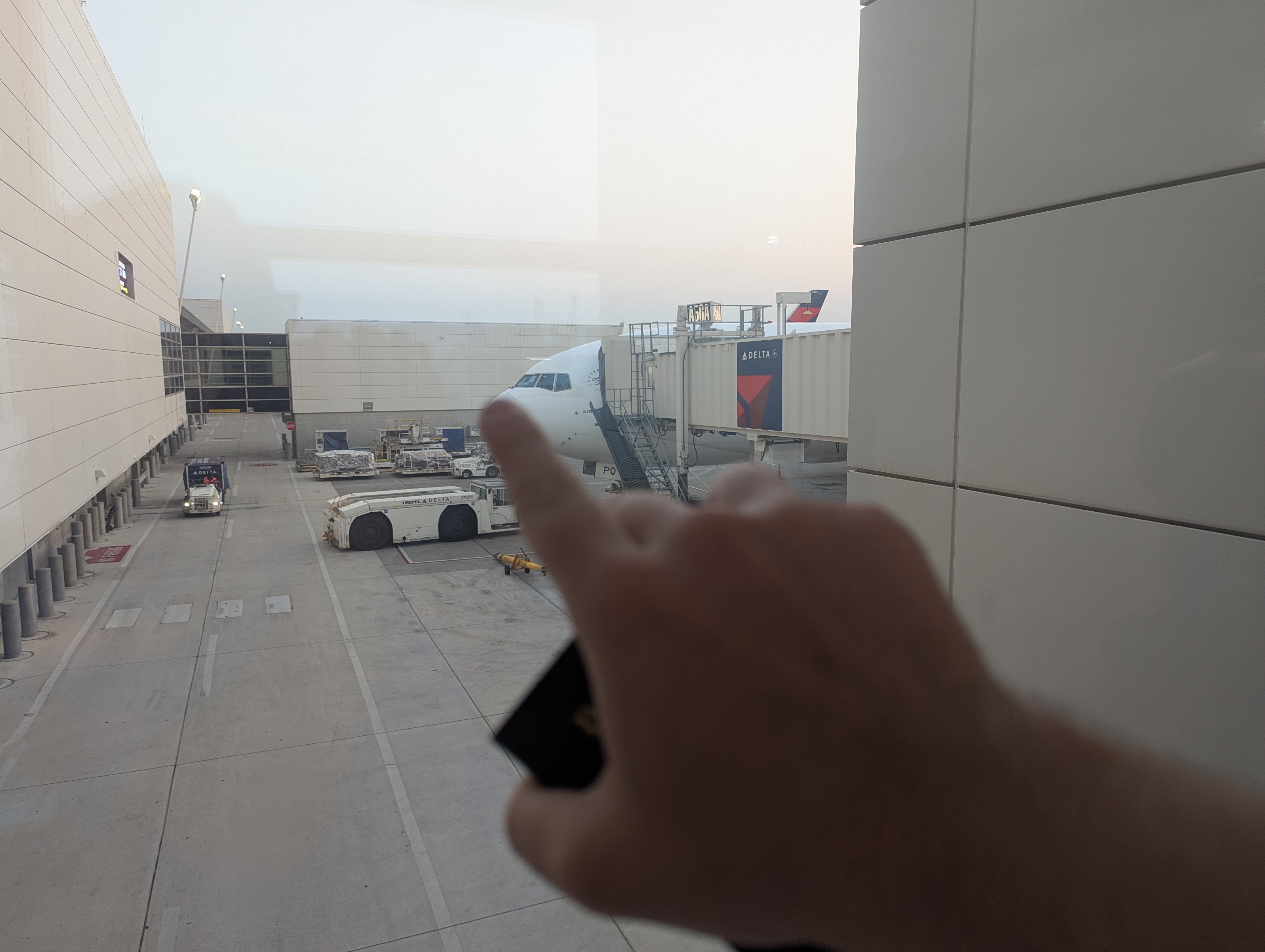
My flight departed Detroit in the evening and arrived in Paris in the late morning. We were told that there’d be people holding Wikimania signs past baggage claim, and to meet them before heading to shuttles. I didn’t see anyone, but as I had friends who had already found the shuttle, they told me the location and I went to the shuttle directly. The shuttle had been delayed from leaving the airport, as our driver had managed to immediately hit a car, but we eventually got to the hotel.
Travel to my return flight was even smoother, though a bit more annoying: as my flight was scheduled to depart at 9:10 am, I was picked up at my hotel at 5:15. Perhaps this is on me for not requesting a later flight. There was only one other traveler on this return “shuttle” (which was really just a large car).
the conference itself
While this was my first Wikimania, it was not my first Wikimedia conference, as I have attended the past three WikiConference North America (WCNA) events. If you have attended one of those events, Wikimania is pretty much just that, but bigger (around 1000 in-person attendees, compared to a few hundred).
Most people arrived on Monday. There were preconference events held on Tuesday, followed by four days of conference programming, with travel back mainly taking place on Sunday. The conference primarily takes place in the morning and afternoon, while evenings are free.
exclusive events
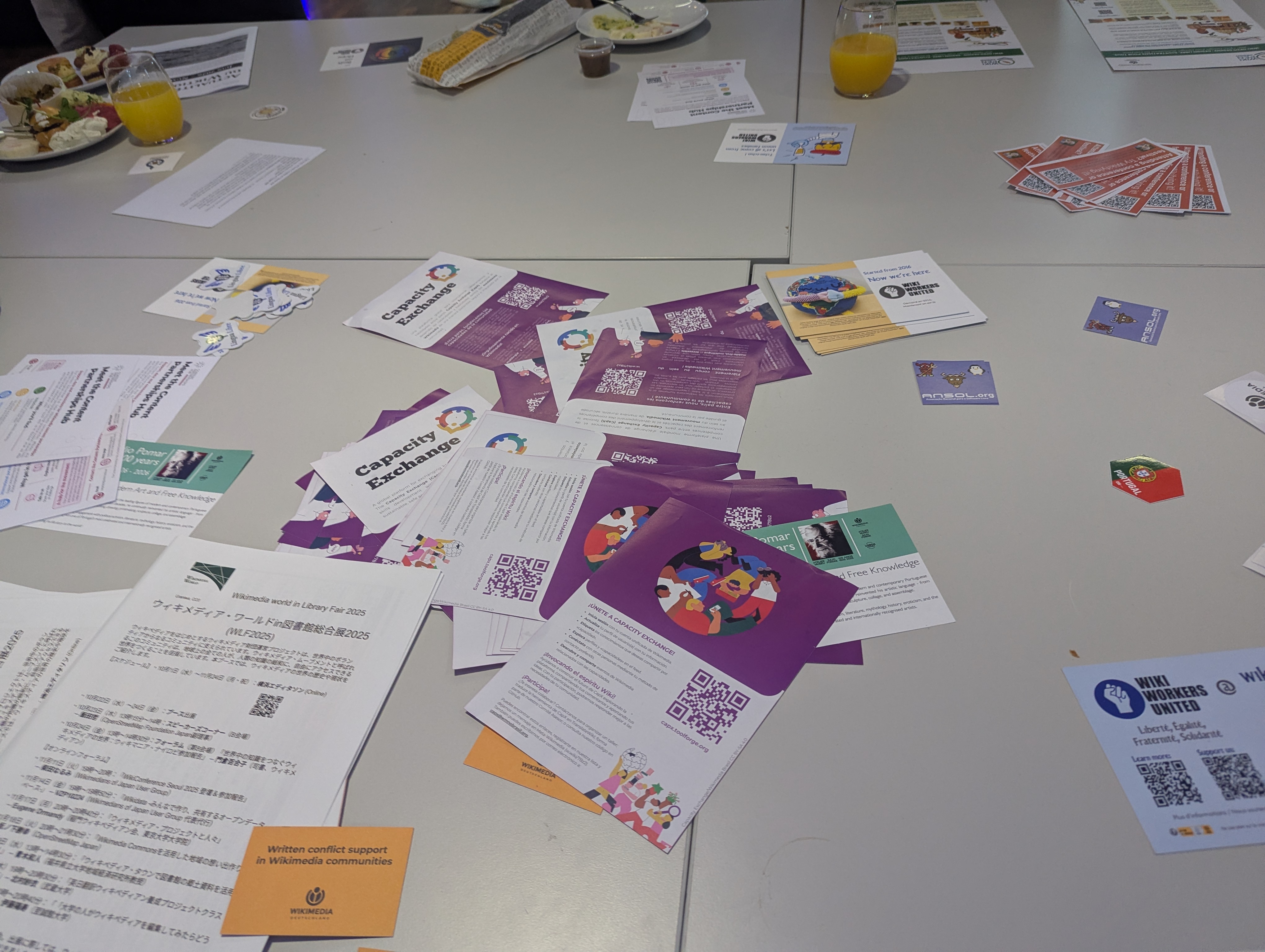
I attended the “Users with extended rights (UWER) preconference”. This was available only to those holding administrator or functionary rights on Wikimedia projects, and was a significant highlight of the conference for me. Most of my friends hold extended rights, so I knew a larger share of the people at this preconference than I did of the broader attendee population.
There was a Foundation-hosted dinner for functionaries (a group including current or former CheckUsers, Oversighters, Stewards, or U4C members) on Thursday. We went out for hot pot, with food paid for by the WMF. This was also a good time.
I have mixed views on the existence of these events. I enjoyed them significantly, but I worry that if too many of the “good” events are reserved for users with high-level permissions, it will be harder to use Wikimania to help bring newer users deeper into these spaces. There’s also the potential for administrator or functionary status to become more of a social group than simply permissions on the project—editors shouldn’t feel the need to become admins or functionaries to connect better with other community members.
The current balance seems reasonable to me, but I heard concerns from some of my friends that these events felt exclusionary. The exclusive events were focused on the editing community, while the rest of the conference was more focused on Affiliates (see below about conference talks). The UWER preconference was so enjoyable because of its focus on editors; when planning programming for future years, I’d want to ensure there’s editor-only spaces open to editors without extended rights.
the talks
As with most conferences, there were a lot of good talks, and a lot of bad talks. I did not give a talk, so I do not have first-hand experience of that experience, but from what I heard, the organizers made some unfortunate choices that led to the talks broadly being worse than necessary.
There are some broad rules for giving a good presentation:
- Don’t just read off of your slides.
- Tell an interesting story.
- Don’t spend a ton of time on a clunky interactive tech demo.
It’s very easy for people who are not experienced giving talks to not realize these rules, and to therefore give a talk that just plainly sucks. The organizers tried to avoid this by making it very clear to presenters that all content presented should be located on slides, instead of switching between slides and other places (such as a tech demo, or a quiz). However, the organizers failed to consider the Dunning–Kruger effect. People who are good at presentations followed these rules, even when they didn’t make any sense (for example, not allowing us to switch between static slides and a Kahoot! quiz). Meanwhile, people who wanted to give clunky tech demos… just ignored the rules and gave clunky tech demos anyway.
Talk selection was also not great. Many of the talks were focused on things of Affiliate interest, while relatively few were focused on topics interesting to general editors. I’d almost like to require people to start with a lightning talk, or a 30-minute talk, and only allow them to give an hour-long talk if their prior talk is good. I know this isn’t possible, since many new people attend Wikimania each year, and some of them do have talks that deserve a longer session. However, it really hurts to see an hour-long talk that is completely uninteresting while knowing many shorter and more interesting talks were rejected.
Seeing the entire schedule and trying to plan out which talks you are going to see can be overwhelming. My advice (and plans for next year) are the following:
- Attend as many lightning talks as possible. These are usually more interesting than hour-long sessions.
- Pick a few longer talks that seem really interesting to attend.
- Don’t fill up your schedule with talks. Having more unscheduled time means more opportunities to talk to other Wikimedians, which tends to be far more valuable than sitting through talks you only find somewhat interesting.
privacy
This is the biggest thing the conference organizers botched. When signing up for a scholarship, you have to give your real name, as travel bookings require it. However, many Wikimedians do not associate their real names with their online presence for safety purposes (in fact, signing up with your real name is explicitly discouraged on English Wikipedia). Additionally, many Wikimedians are transgender, non-binary, or otherwise do not use their current legal names.
These are pretty obvious concerns. Despite this, badges for every scholarship recipient, which were handed out at hotels, included the full legal names of recipients. This was unacceptable. Trying to get badges reprinted was also a bit difficult, and some attendees faced pushback from organizers when requesting reprints, as the organizers didn’t seem to understand why attendees did not want their legal names listed.
Secondly, many Wikimedians do not want pictures of themselves posted online. To address this, attendees could select either a blue or red lanyard, where a red lanyard indicated that a participant did not want to be photographed. Event organizers wore orange lanyards.
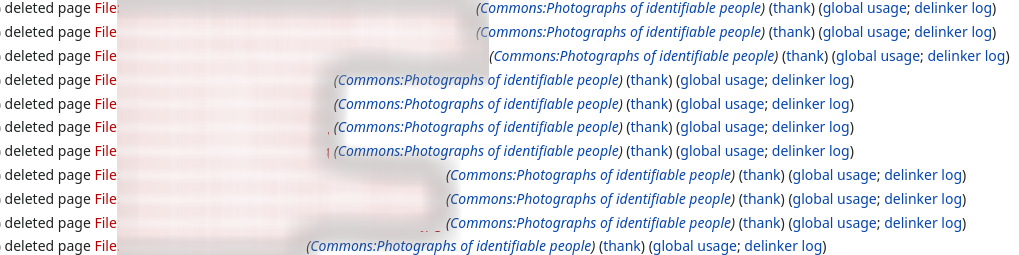
Organizers did not communicate clearly about lanyards to many attendees (including event photographers). Many pictures including participants with red lanyards were uploaded to Wikimedia Commons. Additionally, some photographers took uncomfortable close-up shots of participants. I wore a blue lanyard because I did not mind being in group photos, or being seen in the audience, but there’s something that feels icky about taking a close-up shot of an audience member, even one with a blue lanyard, without asking.
These concerns were relayed by numerous editors to Wikimedia Trust and Safety, who have promised to follow up and make sure these issues do not recur at future events. T&S seems to understand these issues well, and I hope they can help build the necessary institutional knowledge at Wikimania.
what about Paris?
Given the typical travel schedule (fly in Monday, programming Tuesday–Saturday, fly out Sunday), there isn’t much unscheduled time available for sightseeing. I planned to do most of my sightseeing on Monday; however, I managed to get myself injured in a bike crash so I spent most of that day in a French emergency room (more on this in a future blog post).
The conference venue was the Cité des Sciences et de l’Industrie, a large museum in a working-class area on the outskirts of Paris. This meant our hotels were also in working-class neighborhoods, giving us a different view of the city than most tourists. I liked this. The restaurants were cheaper and we got to experience more of how people actually live.
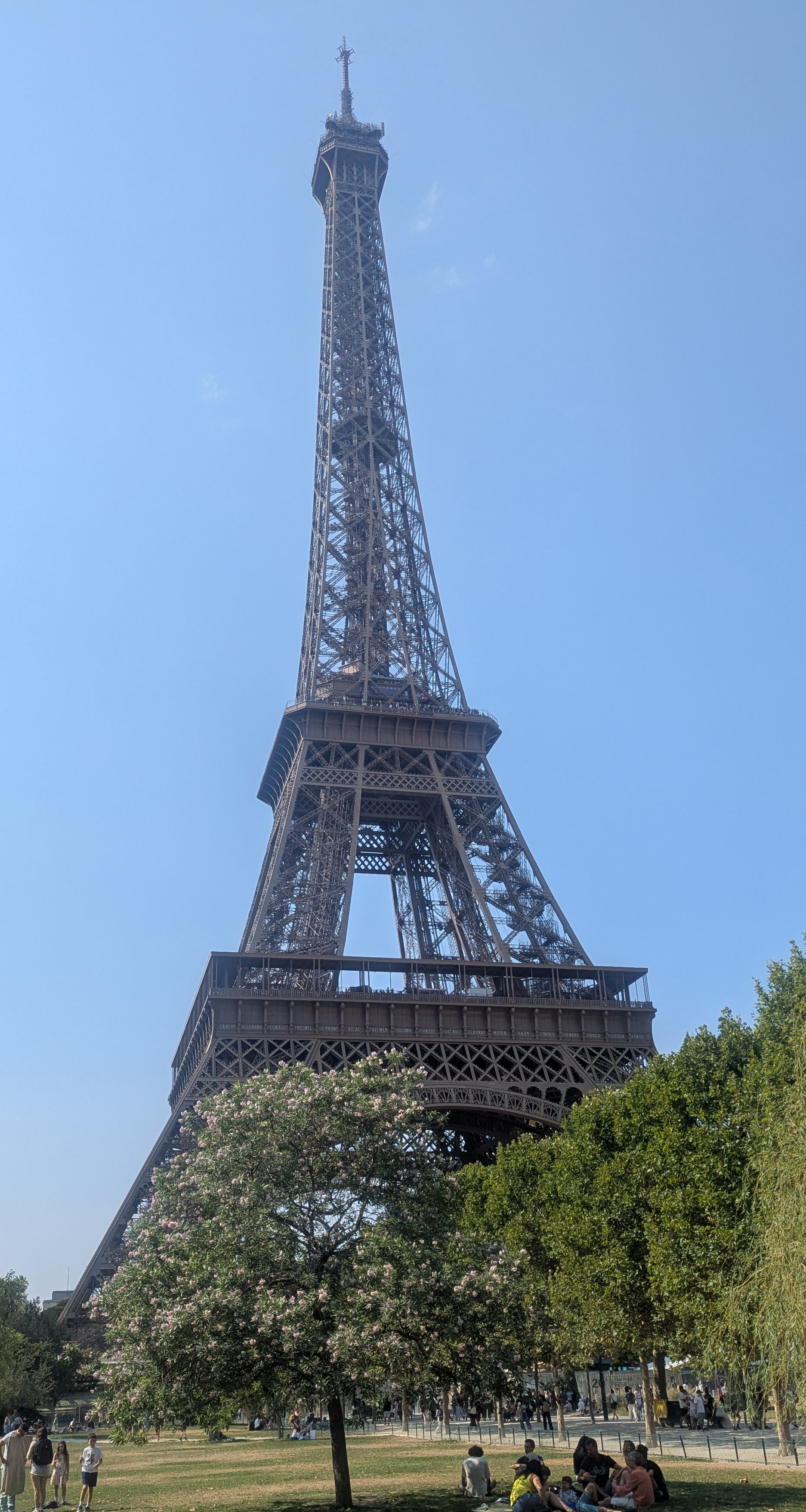
On Saturday, a few Wikimedians and I skipped out on much of the afternoon programming to visit the Eiffel Tower and other touristy sites. This was a nice break from the conference. I’m not too worried about not having time to sight-see on future trips; five days of conference is a lot and sightseeing is a nice break.
The food was delicious, of course. My favorite restaurant was probably Restaurant L’Artiste, serving Italian cuisine. A group of Wikimedians, including myself, filled nearly the entire restaurant (as Parisian restaurants tend to be small this wasn’t hard) and chatted over dinner for hours.
in conclusion
Wikimania was fun. The people are the best part: getting to put a face to names you’ve seen online for years feels great. Meeting Wikimedia Foundation employees is also a nice experience as it helps humanize an organization that often feels somewhat distant and impersonal over the internet.
You get out of the event what you put into it. My favorite talks included “the Hitchhiker’s Guide to the UCoC”, “Who’s Missing? Using AI to Spot Wikipedia’s Coverage Gaps”, and “Make a wish – improving references on Wikimedia projects”. However, most of the value of the conference is in forming better relationships with other editors and brainstorming future ideas. Go out and talk to people—most attendees are quite friendly and nerdy in similar ways to you!
I plan on attending next year’s conference in Santiago, Chile, and I hope to see many of you there!
Comments? This is a static website, so you can't leave them directly. But worry not! If you email me, I will list your comment here.